
At Marble Plus, we’ve supplied premium natural stepping stones throughout Sydney and Brisbane since 1987. Here, we share pathway inspiration for garden lawns, pool sides and alfresco areas.
Garden path ideas with stepping stones
1. Create a floating lawn path
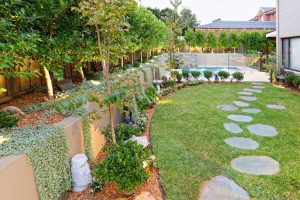
With an organic, old-world feel, a floating lawn pathway is one of the most charming ways to adorn a garden with stepping stones.
Place each stone within the grass so the walkway feels integrated rather than imposed. For the most elegant finish, keep the spacing consistent and allow the grass to frame each stone.
This idea works wonderfully with bluestone stepping stones, which feature a natural blue-grey hue and irregular, rounded edges suitable for both rustic and contemporary garden designs.
2. Pair stepping stones with a decorative gravel path
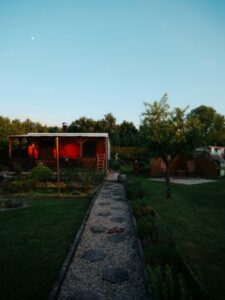
Photo by Jutta Elisabeth on Unsplash.
Stepping stones set within pea gravel create a refined, well-balanced pathway for coastal gardens.
The stone pavers establish a clear structure and a comfortable surface underfoot, while small pebbles improve drainage, add texture, and create subtle visual contrast.
This approach suits side paths, courtyards and informal walkways where full paving can feel too heavy. It achieves a polished aesthetic while maintaining a relaxed, Mediterranean-inspired character.
Light limestone works particularly well in this setting, softening the overall look and pairing seamlessly with rendered walls, architectural planting, timber screens and pale exterior palettes.
For instance, Crema Novelda Limestone features a light beige base with warm undertones and delicate fossil detailing.
3. Weave a winding path through garden beds
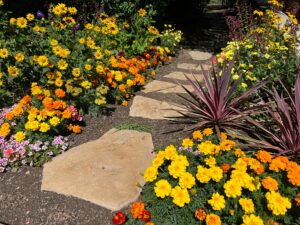
Photo by craig hellieron Unsplash.
A curved stepping stone path encourages people to slow down and enjoy the garden. Instead of following the shortest route, it creates a gentle journey through beautiful blooms.
These stone garden paths are also a practical solution, providing easy access for maintenance while adding definition to softer, heavily planted areas. This is especially useful where you need to reach taps, raised beds, feature trees or rear entertaining zones without compacting soil or damaging plants.
The key is to let the stepping stone path respond naturally to the landscape fabric. Curve it around established trees, ornamental grasses, flowers or a sculptural feature to make the walkway feel cohesive and considered.
Planting along the edges will help the path settle into the garden. Use clipped hedging for a sophisticated look, native grasses for a minimalist aesthetic, or layered foliage for a relaxed feel.
4. Lay a clean grid path with square or rectangular stones
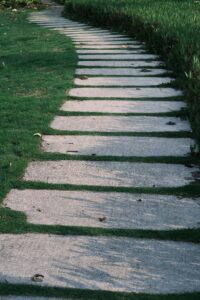
To create a more modern, architectural finish, lay square or rectangular limestone stepping stones in an evenly spaced grid. This creates a crisp, intentional walkway that suits modern homes, courtyards, pool surrounds and structured garden designs.
For maximum impact, align the pathway with an architectural focal point, such as the front door, garden wall, alfresco opening, pool fence or central planting axis.
Bring warmth to the clean, straight lines of this modern garden path with the gentle tonal variation and subtle texture of sandblasted or tumbled Sinai Pearl Limestone.
Available in a 600 x 600 x 30mm format, the consistent sizing of these large stepping stones makes them ideal for formal layouts where alignment, spacing and proportion are paramount.
5. Add stepping stones across a water feature

Photo by Sanju Pandita on Unsplash.
Stepping stones placed across a pool, pond or stream can turn a garden path into an outstanding design feature.
Choose stones with enough size and weight to feel stable underfoot. A textured finish is also important, as outdoor stone near water needs to provide grip and comfort when wet.
Surrounding the stones with plantings can make the water feature feel more connected to the garden. Use reeds, water plants, low grasses or sculptural foliage to frame the path without blocking the walking line.
These stepping stone walkway designs are ideal for luxurious gardens, entryways, courtyards and poolside landscapes where the path should feel calm yet visually striking.
6. Get creative with a checkerboard pattern
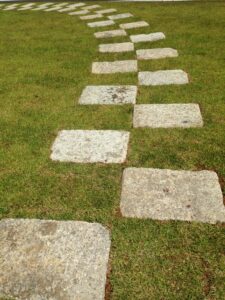
Photo by sonia singh on Unsplash
A checkerboard stepping stone path is fun, fresh and full of personality. Instead of placing stones in a straight line, alternate square pavers with pockets of planting, gravel or lawn to create a playful outdoor feature.
For a softer look, fill the gaps between the stones with low-growing herbs or groundcovers. Creeping thyme, native violets, mondo grass, dichondra and compact lawn varieties can help soften the edges and give the path a lush look and feel.
This stepping stone walkway idea works especially well in courtyards, entertaining areas, and large lawns where you want the path to feel decorative as well as useful. Use it to connect outdoor zones, such as a dining area, vegetable garden, fire pit or pool gate.
7. Enhance a side entry with layered stone designs

Photo by Grace Anne Bobadilla on Unsplash.
A stepping stone walkway can transform a narrow side passage into a purposeful, functional and inviting access area that adds real value to the home’s overall presentation.
Set the stones into gravel, grass or low planting, depending on sunlight, drainage and how much upkeep the area needs.
A brick border can also be used to frame the path, hold gravel or planting in place and give the side entry a more complete finish. This works especially well when the brick tones complement the home’s exterior, garden edging or nearby hardscaping.
The benefits of stepping stones for walkways
Timeless charm
Unlike concrete pavers, natural stepping stone pathways bring character and depth to outdoor living spaces. Each piece has its own variation in tone, texture and surface detail, giving your walkway a finish that feels considered and unique.
Whether set into lawn, gravel, mulch or groundcover, these stones soften a landscape and create a sense of flow through the garden. They work beautifully as a subtle design detail or as a statement feature leading to an entrance, pool area, alfresco space or private garden zone.
Safer journeys
Stepping stones help to create more stable and defined garden pathways through areas that may become damp, muddy or uneven. This makes them a practical choice for gardens, side access paths, pool surrounds and outdoor spaces exposed to the weather.
For wet areas, it’s important to choose a suitable surface finish and speak with your supplier or installer about slip resistance, drainage and placement.
Durable materials
Natural stepping stones are designed to bring lasting beauty to outdoor environments. Materials such as limestone and bluestone are valued for their strength, texture and enduring visual appeal.
When installed correctly, stepping stones can withstand regular foot traffic while maintaining a premium finish. They offer a simple way to enhance a garden, backyard, courtyard or landscape design for decades to come.
Low maintenance
Stepping stone paths are a convenient choice for those who want a wonderful garden feature with minimal upkeep. Occasional washing with water and regular sweeping can help remove dirt, leaves and debris.
FAQs
The best stone for a stepping stone walkway depends on the property’s style, the surrounding landscape palette, and the finish you wish to achieve.
For example, bluestone is favoured for a natural, grounded and textural look, while limestone is ideal for a lighter, more refined pathway with a warm or coastal feel.
Explore a diverse collection of natural stepping stone options with Marble Plus.
To ensure stability and longevity, stepping stones should be at least 300mm thick. Make sure to match each stone’s level with the surrounding area to reduce the risk of tripping.
A base of compacted soil topped with a fine aggregate, then a layer of sharp sand for levelling, is essential for a walkway that won’t shift or wobble over time. Avoid laying stones on sand alone, as this can lead to movement.
For a natural walking stride, space stones so their centres sit around 60 to 70 cm apart, adjusting slightly for a curved path.
However, the exact spacing will depend on the size of each stone, the path layout and the people using the walkway. Before installation, place the stones loosely on the ground and test the walking rhythm from both directions.
To clean natural stone stepping stones, apply pH-neutral soap mixed with water directly to the surface. Avoid harsh chemicals unless they have been confirmed as suitable for the specific stone.
Periodic checks can also help identify movement, chips or wear early, keeping the walkway safe, stable and looking its best season after season.
For tailored advice, get in touch with the Marble Plus team today.
Discover natural stepping stones with Marble Plus
Inspired by the above stepping stone ideas, you can transform the way your outdoor space looks, feels and functions.
Create a breathtaking garden pathway that feels considered and connected to its surroundings with natural stepping stone pavers from Marble Plus. Our collection includes premium bluestone and limestone options in an array of formats and finishes.
Explore online or visit our Seven Hills and Salisbury showrooms to discover the tone, texture and quality of each stone in person.